What is classical music? · Unit 3: Instruments
The string family
The four string instruments of the orchestra are the violin, the viola, the cello and the double bass, from the smallest and highest to the largest and lowest. The violinists are divided into two groups, first and second violins, so the strings can play in five parts.
The strings are the largest section. A full orchestra may have sixteen first violins, fourteen seconds, twelve violas, ten cellos and eight double basses, about sixty players in all. So many players on each line give the strings their warm, blended sound.
Most of the time the strings are played with a bow strung with horsehair, which lets a note swell, fade or last as long as the player wishes. Plucking the strings with a finger is called ; moving the bow back and forth very fast on one note is , a shimmer that can sound like whispering or like a storm.
The violins usually carry the melody. The viola, a little larger, fills in the middle of the harmony; Schubert played it in his family’s string quartet, with two of his brothers on the violins and his father on the cello. The cello, held between the knees, plays bass lines and sings warm tenor melodies, and the double bass doubles the bass line an octave lower.
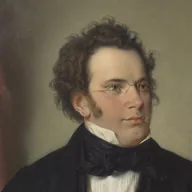 SchubertString Quartet No. 14 in D minor, D. 810
A is the string family in miniature: two violins, a viola and a cello, with no double bass. In 1824 Schubert built the slow movement of his quartet Death and the Maiden as a set of on the solemn music that stands for Death in his own song of 1817. The is a hushed, slow march, all four instruments playing chords together. In the first variation a violin floats high above it; in the second, the cello takes the tune.
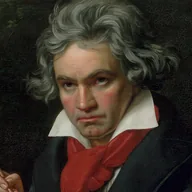 BeethovenSymphony No. 5 in C minor, Op. 67
The third movement of Beethoven’s Fifth begins in a whisper: the cellos and double basses alone climb up from the depths, before the horns answer loudly.