What is classical music? · Unit 3: Instruments
Voices and the choir
Singers are grouped by the range of their voices. Women’s voices, from high to low, are soprano, mezzo-soprano and alto, also called contralto; men’s voices are tenor, baritone and bass, and sound about an octave lower. In cathedral choirs the top line has long been sung by boys whose voices have not yet broken, called trebles, and a countertenor is a man who sings in the alto range.
Range is not everything. Two singers who reach the same notes can still differ in colour and weight, and in where the voice feels most at home. A trained solo voice can carry over a full orchestra without a microphone.
A song is not tied to one voice. Schumann dedicated Dichterliebe (A Poet’s Love), his of 1840 on poems by Heine, to a soprano, but because the poet in the poems is a man it is most often sung by tenors and baritones. A lower voice simply sings it in a lower key.
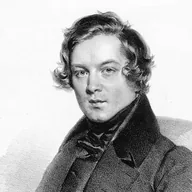 SchumannDichterliebe, Op. 48
In the seventh song, Ich grolle nicht (I bear no grudge), the poet insists that he is not bitter, although his heart is breaking. One voice and a piano carry the whole drama: the voice declaims the words over steady, repeated chords. In the second half it climbs to its highest notes, and Schumann even offers an optional top note for singers who have it.
A choir has several singers on each part. Most mixed choirs sing in four parts, soprano, alto, tenor and bass, often written , and each part can divide in two for a fuller sound.
On stage the singers stand in sections, each part together, so that they can hear their own line and the conductor can bring it in. Often the women stand in front and the men behind; some conductors mix the parts instead, so that every singer hears the whole harmony.
Many large works bring soloists and a choir together. Mozart’s , the Mass for the dead that he left unfinished when he died in 1791, needs four soloists, soprano, alto, tenor and bass, and a four-part choir.
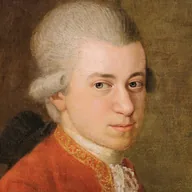 MozartRequiem in D minor, K. 626
After a dark opening for the orchestra, the choir enters with “Requiem aeternam” (eternal rest). The basses begin, and the other parts follow one after another on the same theme, in .
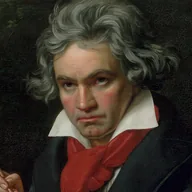 BeethovenSymphony No. 9 in D minor, Op. 125
Beethoven’s Ninth Symphony of 1824 was the first symphony by a major composer to use voices. The orchestra plays alone for three movements and more; then the clash that opened the finale returns, and a man’s voice cuts in. The baritone soloist sings words Beethoven wrote himself, “O friends, not these sounds!”, and soon leads the Ode to Joy, which the choir takes up.