What is classical music? · Unit 1: First steps
What “classical” means
Classical music is used in two ways. Most often it means a whole tradition: music written down for concerts, churches, courts and opera houses in Europe, and later far beyond it. Its roots go back to the church music of the Middle Ages, and most of the music played today was written from about 1600 onwards.
Written with a capital C, Classical is also the name of one period inside that tradition: the age of Haydn, Mozart and Beethoven, roughly 1750 to 1820. The word itself was first applied to music in the early nineteenth century, for older works that had lasted and were held up as models.
What holds the tradition together is the score. A composer writes the music down: every note, and marks for speed, loudness and character. The score is a set of instructions, not a sound, and it needs performers to bring it to life.
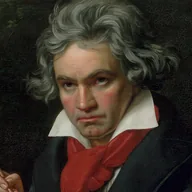 BeethovenSymphony No. 5 in C minor, Op. 67
Four notes, three short and one long, open Beethoven’s Fifth Symphony. They were first played in Vienna in December 1808, and every orchestra since has played the same notes. Listen to how this performance shapes them: how long the held notes last, how much silence falls between the phrases.
Because performers make choices, the same symphony can sound quite different from one recording to the next. One conductor takes a movement faster, another lets a melody breathe, a third brings out the horns. Listening to classical music is partly listening to those choices.
A well-known story says Beethoven called this opening fate knocking at the door. It comes from his secretary Anton Schindler, who after the composer’s death forged entries in the notebooks visitors had used to talk to him, so it is best taken as a legend. The music does not need it.
Most of the works you will meet here have a plan: themes that are stated, taken on a journey and brought back. Hearing that plan as it unfolds is the skill this course builds towards.