What is classical music? · Unit 1: First steps
Titles, numbers and movements
A full title such as Symphony No. 104 in D major can look like a code, but each part has a job. Symphony is the kind of work. No. 104 is its place among the composer’s symphonies. D major is its : the scale the music is built on, with D as its home note, the .
Many titles also carry an opus number, from the Latin word for work, as in Beethoven’s Symphony No. 5, Op. 67. Composers or their publishers gave these numbers, so they do not always follow the order in which the music was written.
For some composers, scholars later listed every work in a catalogue, and the catalogue number takes the place of an opus number: K. for Ludwig von Köchel’s Mozart catalogue, BWV for the catalogue of Bach’s works, D. for Otto Erich Deutsch’s Schubert catalogue and Hob. for Anthony van Hoboken’s Haydn catalogue.
Nicknames are another matter. Haydn never called this symphony London; the name was attached later, although all twelve symphonies he wrote for concerts in London have an equal claim to it. Beethoven never called his Op. 27 No. 2 the Moonlight Sonata either: the name was added by others after his death.
Large works are divided into : separate pieces, each complete in itself, played one after another with a short pause. A movement is usually named by its tempo marking, in Italian: is fast, is at a walking pace, is slow and is very fast. Haydn’s symphony has four movements: Adagio – Allegro, Andante, Menuet: Allegro, and Finale: Spiritoso.
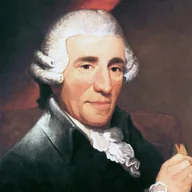 HaydnSymphony No. 104 in D major
The first movement opens slowly and solemnly, then changes pace. Here the Adagio gives way to the Allegro, and the main theme enters quietly in the violins, in D major. One movement can hold two tempos, and its title names both.
In Haydn’s day audiences often applauded between movements, and sometimes in the middle of one. In 1778 Mozart wrote happily to his father that a Paris audience had burst into applause halfway through the first movement of his new symphony. The habit of waiting in silence until the whole work has ended came only around 1900.