What is classical music? · Unit 2: Five periods
The late Romantic period
Towards the end of the nineteenth century the Romantic style reached its largest scale. Between about 1880 and the First World War, Mahler, Richard Strauss, Elgar, Sibelius and Rachmaninoff wrote some of the longest and most richly coloured music in the repertoire.
Orchestras grew enormous. Mahler’s First Symphony asks for seven horns and four trumpets; his Eighth was first performed in Munich in 1910 by more than a thousand singers and players. Symphonies could last over an hour, and harmony became rich and , sliding from key to key under the influence of Wagner.
Stories and places mattered as much as ever. Richard Strauss told whole tales with an orchestra in tone poems such as Don Juan and Till Eulenspiegel, and Sibelius drew on the legends of Finland’s national epic, the Kalevala.
Late Romantic composers also mixed the grand with the everyday. Mahler put folk songs, marches, dances and the sounds of a village band into his symphonies, often side by side with music of great seriousness.
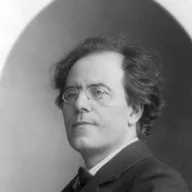 MahlerSymphony No. 1 in D major
The third movement of Mahler’s First Symphony is a funeral march. Its tune is the children’s round Frère Jacques, known in German as Bruder Martin, sung here in a minor key. After a few beats on the timpani a single double bass plays it, high and quietly; then other instruments join one after another, as in a round.
MahlerSymphony No. 1 in D majorSuddenly a different band breaks in: oboes and clarinets play a lilting, slightly tipsy tune over cymbals and bass drum. Listeners have heard it as a Bohemian village band or as Jewish klezmer music. The funeral march and the band play off each other for the rest of the movement.