What is classical music? · Unit 4: Kinds of work
Overtures, suites and tone poems
Much orchestral music is neither a symphony nor a concerto. An was first the instrumental opening of an opera. From the early nineteenth century composers also wrote concert overtures that stand alone; Mendelssohn was seventeen when he wrote his overture to A Midsummer Night’s Dream in 1826.
A began as a set of dances, and later became a set of numbers taken from a ballet or a play. Tchaikovsky’s Nutcracker Suite was heard in concert in 1892, months before the ballet itself reached the stage. The eighteenth century also enjoyed lighter music in several short movements, the and the , played to entertain at an evening party or a celebration; Mozart wrote many, most of them to order.
A , or tone poem, is a single orchestral movement that follows a story, a poem or a picture. Liszt gave the form its name in the 1850s. Music that tells or paints something outside itself is called , and the Romantics loved it.
Berlioz had already told a whole story in a symphony. For his Symphonie fantastique, first played in Paris in 1830, he wrote a story to go with it, a programme: a young artist, desperate with love, sees his beloved everywhere and, in an opium dream, witnesses his own execution and a witches’ sabbath. One melody, the or fixed idea, stands for the woman he loves and returns in all five movements, changed by each scene.
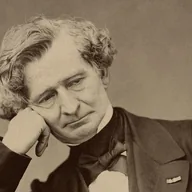 BerliozSymphonie fantastique, Op. 14
The artist is at a glittering ball. In the middle of the waltz the melody of the beloved appears on the flute and oboe; for a moment the dance fades to a shimmer beneath it, then picks up again.
In programme music, let the story guide your ears: a change of scene usually brings a new tune, a new rhythm or a new colour. In a suite or a set of dances, find the dance in the rhythm first, three beats for a waltz, two for a march, then wait for the moment when the tune and the key change.